 ultimate-guide
Sustainable Fat Loss for Perimenopausal Women: 2026 Guide
Table of Contents
- Why Sustainable Fat Loss Feels Impossible in Perimenopause
- Can I Lose Weight Without Dieting? What Sustainable Fat Loss Really Requires
- Perimenopause Strength Training Benefits for Metabolic Health
- Emotional Eating Triggers in Midlife: The Piece Most Plans Ignore
- Building Sustainable Habits That Survive Real Life
- What Actually Moves the Needle: Protein, Fiber and Daily Movement
- Conclusion
- Frequently Asked Questions
Last Updated: September 24, 2026
Why Sustainable Fat Loss Feels Impossible in Perimenopause
You're doing everything you've always done, and your body has stopped cooperating. Sustainable fat loss for perimenopausal women stalls for a specific, physical reason: oestrogen is fluctuating and falling, and that shift changes where your body stores fat and how readily it releases it. Oestrogen decline shifts fat storage toward the abdomen, reduces insulin sensitivity, and accelerates muscle loss when you're not training against it (NIH National Institute on Aging). None of that is a willpower problem.
What Estrogen Decline Actually Does to Body Composition
Falling oestrogen changes two things at once. It redistributes fat storage toward visceral fat around the middle, which is why your waistband tells the story before the scale does, and it blunts insulin sensitivity, so the same meal that used to sail through now produces a bigger blood sugar response. Muscle mass also starts leaving faster than it did in your thirties, a process called sarcopenia, and because muscle is metabolically active tissue, losing it quietly lowers your metabolic rate.
Why Your Old Diet Stopped Working
The 1,200-calorie plan that worked at 35 now leaves you exhausted, hungry, and heavier. A caloric deficit still matters, but a steep one costs you muscle you can't afford to lose, and muscle loss drags your metabolic rate down with it. Restrictive dieting also amplifies food noise, which is what drives the 9pm raid on the cupboard. You haven't lost the weight because your definition of consistency is actually perfectionism, which keeps you stuck in all-or-nothing patterns, paired with emotional eating no amount of willpower fixes.
Can I Lose Weight Without Dieting? What Sustainable Fat Loss Really Requires
Yes, you can lose weight without dieting, but only if you change what you're building rather than what you're restricting. Sustainable fat loss is the deliberate reduction of body fat through habits you can maintain for years, not weeks, while protecting muscle, energy, and your relationship with food. It requires four things working together: enough protein, enough fiber, resistance training, and a nervous system that isn't running on empty.
The Difference Between Weight Loss and Fat Loss
Weight loss is a number on a scale. Fat loss is a change in body composition. You can lose five pounds of muscle and water and call it progress while your waist measurement doesn't budge. Fat loss is slower on the scale and faster in the mirror, because you're keeping the tissue that keeps you strong and metabolically healthy while shedding the tissue that doesn't serve you.
Perimenopause Strength Training Benefits for Metabolic Health
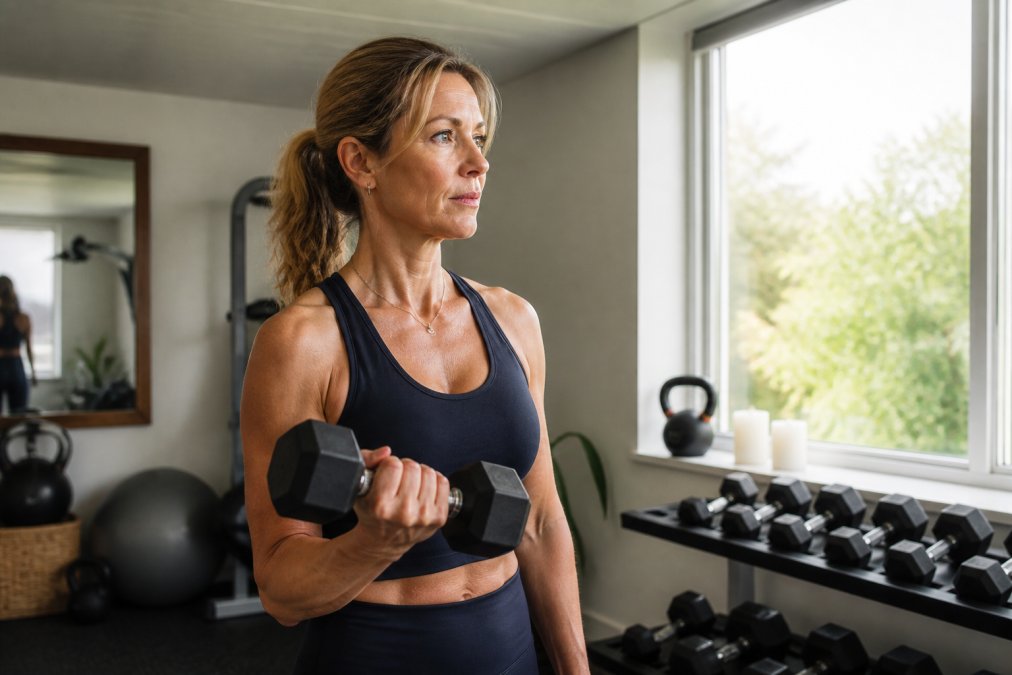
Strength training is the single most protective habit you can build during the menopause transition. It defends muscle mass, supports bone density, and improves insulin sensitivity, which matters more now that oestrogen isn't doing that work for you. The training principles are the same: progressive overload, adequate recovery, and consistency over intensity. What changes is the recovery window, not the method.
What Happens to Muscle and Bone Without Resistance Training
Muscle mass declines roughly 3 to 8 percent per decade after age 30, and that rate accelerates during perimenopause when oestrogen, which helps regulate muscle protein synthesis, fluctuates and falls. Bone tells a similar story. Oestrogen suppresses bone resorption, so when it drops, bone breakdown outpaces bone building. Women can lose up to 20 percent of their bone density in the five to seven years after menopause (NIH National Institute of Arthritis and Musculoskeletal and Skin Diseases).
How to Structure Training That Actually Protects Muscle
Two to three full-body sessions per week is the evidence-backed minimum for preserving muscle during a caloric deficit. Each session should hit the major movement patterns: a squat or leg press, a hinge like a deadlift or hip thrust, a push like a chest press or overhead press, a pull like a row or lat pulldown, and a carry or core movement.
Learn more about HER Aligned here →
The Bone Health Angle Most Plans Skip
Bone loss is silent until it isn't. A fracture from a fall that would have been a bruise at 35 can be a life-altering event at 55. Strength training loads bone through axial compression and muscle pulling on bone, which stimulates osteoblasts, the cells that build new bone. The effect is site-specific: squats and deadlifts load the spine and hips, while overhead presses load the shoulders and wrists.
Emotional Eating Triggers in Midlife: The Piece Most Plans Ignore
Emotional eating triggers in midlife rarely look like a crisis. They look like a Tuesday: the 4pm slump, the argument you didn't have, the reward you feel you've earned. Add disrupted sleep and a shifting circadian rhythm, and your appetite regulation gets worse while your stress response gets louder. This is the piece most plans skip entirely, because a meal plan can't touch it.
Why Willpower Was Never the Problem
Willpower is a finite resource that depletes under stress, poor sleep, and hunger. If your plan depends on white-knuckling your way through every evening, it was designed to fail. The women who keep results for life aren't more disciplined than you. They've changed the patterns underneath the choices, so the choice stops feeling like a fight. That's the work, and it's the only thing that lasts.
Building Sustainable Habits That Survive Real Life
Habits that survive real life are small, specific, and boring. Not "eat better." Instead: protein at breakfast, a walk after lunch, two training sessions booked like meetings. Behaviour change in perimenopause has to absorb sick kids, work travel, and the weeks you sleep badly. A habit that only works when life is calm isn't a habit, it's a fair-weather friend.
What Actually Moves the Needle: Protein, Fiber and Daily Movement
Three levers do most of the work, and none of them require a meal plan. Protein preserves muscle and keeps you full. Fiber slows digestion, steadies blood sugar, and feeds your gut microbiome, which most plans ignore entirely. Daily movement, including the walking you don't count as exercise, adds up through non-exercise activity thermogenesis. Prioritize protein at every meal, build fiber from whole foods like vegetables, legumes, and berries, and aim for a baseline of daily steps before you add anything intense.
Protein: The Muscle Insurance Policy
Most women in perimenopause eat well below the protein threshold their muscles need to hold onto mass during a caloric deficit. Research consistently shows that 1.6 to 2.2 grams of protein per kilogram of bodyweight per day preserves lean mass during weight loss, yet a common pattern is women eating 60 to 80 grams total. For a 70-kilogram woman, that's a gap of 50 to 80 grams daily.
Fiber: Blood Sugar, Satiety, and the Gut-Hormone Axis
Fiber does three jobs that matter more in perimenopause than they did a decade ago. It slows gastric emptying, which keeps you full longer and blunts the blood sugar spike after a meal. It feeds beneficial gut bacteria that produce short-chain fatty acids, which support insulin sensitivity and reduce inflammation. And it binds to excess oestrogen in the gut, helping regulate the hormone fluctuations that drive symptoms.
Daily Movement: The Calories You Don't Count
Non-exercise activity thermogenesis, or NEAT, is the energy you burn through all the movement that isn't formal exercise: walking to the mailbox, taking the stairs, standing while you cook, fidgeting. For most women, NEAT accounts for more daily calorie expenditure than intentional exercise does. A desk job can suppress NEAT by hundreds of calories a day compared to a more active lifestyle.
| Lever | What It Does | Daily Target | Why It Matters in Perimenopause |
|---|---|---|---|
| Protein | Protects muscle, increases satiety, raises thermic effect | 1.6-2.2g per kg bodyweight | Counters muscle loss and food noise |
| Fiber | Steadies blood sugar, feeds gut bacteria, binds excess oestrogen | 25-35g from whole foods | Improves satiety, blood sugar regulation, and hormone balance |
| Daily movement | Raises energy expenditure quietly through NEAT | Consistent steps plus 2-3 lifts weekly | Supports body composition without dieting |
Conclusion
The reason this keeps feeling impossible is that you've been solving the wrong problem. You don't need another plan to follow. You need the thinking and behavioural patterns underneath your food and training changed, and that's the work Coach Justine does with women every day. Through 12 years of coaching and 600+ lasting transformations, the approach is built on mindset work, evidence-based nutrition, and strength training that fits a real, messy life.
Learn more about HER Aligned here →
Frequently Asked Questions
What is the fastest way for a perimenopausal woman to lose weight?
There is no shortcut that holds. The fastest route that actually lasts is building muscle through strength training, eating enough protein to support that muscle, and addressing the eating patterns that derail you under stress. Crash diets drop weight fast, but a large share of it comes from muscle and water, which slows your metabolic rate and makes the next attempt harder. Sustainable fat loss for perimenopausal women means changing body composition, not just the number on the scale.
Can I lose weight without dieting?
Yes, if you stop treating 'diet' as the only path. You can lose weight without dieting by building awareness around hunger, fullness and emotional triggers, eating protein and fiber at most meals, and lifting weights two to three times a week. What you cannot do is lose fat while ignoring the habits that got you here. The structure changes; the need for consistency does not.
What hormone causes weight gain in perimenopause?
Estrogen decline is the main driver. As estrogen drops, fat storage shifts toward the abdomen, muscle mass becomes harder to maintain, and insulin sensitivity changes. Cortisol is often blamed, but the research does not support cortisol as the cause of belly fat in perimenopause. The real driver is the hormonal shift, and the response that helps most is strength training, adequate protein and stress management, not chasing a lower cortisol number.
How does the decline in estrogen affect body composition?
Lower estrogen changes where your body stores fat and how easily it holds onto muscle. Visceral fat around the abdomen increases, and muscle mass starts to decline faster if you are not resistance training. This is why the scale can stay the same while your shape changes. Body composition matters more than weight, and perimenopause strength training benefits include protecting muscle so your metabolic rate does not drop as quickly.
How can I break the cycle of yo-yo dieting?
Start by naming what actually breaks the cycle. For most women it is all-or-nothing thinking, not lack of knowledge. You do not need another meal plan; you need to change how you respond when life gets messy. That means building self-trust through small, repeatable actions, addressing emotional eating triggers in midlife, and treating setbacks as information rather than failure. This is where coaching differs from another app.
Is it possible to lose fat without restrictive dieting?
It is, and for perimenopausal women it is usually the only approach that lasts. Restrictive dieting lowers muscle mass, disrupts sleep and drives food noise, all of which work against sustainable fat loss. A better approach is eating enough protein and fiber, lifting weights, sleeping well, and building habits you can keep for years, not weeks. Fat loss happens in a mild calorie deficit, not a punishing one.
What role does strength training play in metabolic health?
Strength training is the single most protective habit for metabolic health in perimenopause. It preserves and builds muscle, which supports protein synthesis and helps maintain your metabolic rate as estrogen declines. It also improves insulin sensitivity and blood sugar regulation. Perimenopause strength training benefits extend beyond the gym: better body composition, stronger bones and more energy through the day.
Why does weight loss feel impossible during perimenopause?
It feels impossible because the rules changed and nobody told you. The diet that worked at 35 now leaves you tired, hungry and heavier. Hormonal fluctuations affect appetite, sleep quality and where fat is stored. Add emotional eating triggers in midlife, plus a schedule that leaves no room for recovery, and willpower alone cannot close the gap. The fix is not more discipline; it is a different structure.