 ultimate-guide
Can You Lose Weight During Perimenopause?
Table of Contents
- Why Perimenopause Weight Loss Feels So Different
- How to Lose Belly Fat During Perimenopause
- Best Exercises for Perimenopause: What Actually Works
- Perimenopause Diet Plan: Nutrition That Supports Fat Loss
- The Psychological Barriers Behind Perimenopause Weight Loss Resistance
- Sleep Hygiene and Stress Management for Body Composition
- Building Sustainable Habits That Outlast the Menopause Transition
- Conclusion
Last Updated: August 10, 2026
Why Perimenopause Weight Loss Feels So Different
You can lose weight during perimenopause, but not by doing what worked in your 30s. At Coach Justine, this is the first thing we address with every new client, because the frustration of doing "everything right" and seeing no results has a biological explanation. Perimenopause reshapes how your body stores fat, burns calories, and responds to food. It is not simply aging, it is a distinct hormonal phase driven by fluctuating estrogen and progesterone levels that directly interfere with weight management.
Estrogen Decline and Its Effect on Fat Storage
Estrogen decline is the central driver of perimenopausal weight gain. As estrogen levels fluctuate and trend downward, fat storage patterns shift from the hips and thighs toward the abdomen. Lower estrogen reduces insulin sensitivity, making it harder for your body to process carbohydrates efficiently and easier to accumulate visceral fat around the organs. The hormonal imbalance also affects appetite-regulating hormones like leptin and ghrelin, which is why many women report stronger food cravings and less satiety during this phase.
Metabolic Slowdown, Sarcopenia, and Basal Metabolic Rate
Perimenopause coincides with age-related muscle loss, called sarcopenia, which directly reduces your basal metabolic rate. Lean muscle mass is metabolically expensive tissue; the less you have, the fewer calories you burn at rest. Most women lose muscle mass gradually from their mid-30s onward, and the hormonal shifts of perimenopause accelerate that process. The result is a lower basal metabolic rate at the exact moment estrogen decline is promoting fat storage, making perimenopausal weight loss feel like running uphill in sand.
How to Lose Belly Fat During Perimenopause
Belly fat during perimenopause does not respond to the same solutions it did in your 20s. The shift from subcutaneous fat to visceral fat accumulation changes both the health stakes and the required approach.
Visceral Fat vs. Subcutaneous Fat: Why Location Matters
Visceral fat is stored deep within the abdominal cavity, surrounding your organs. Subcutaneous fat sits just beneath the skin. Visceral fat is metabolically active in a harmful way, it releases inflammatory compounds and worsens insulin sensitivity, increasing cardiovascular health risks significantly. The good news is that visceral fat can be reduced in the same way subcutaneous fat is, through the right calorie deficit for you.
Our ovaries contain the highest concentrated amount of oestrogen in our body. So in peri-menopause as your oestrogen levels start to decrease your body looks for a oestrogen elsewhere. A weaker form of oestrogen is found in fat cells which is why the body congregates the fat around our mid-section (closest to our ovaries).
Best Exercises for Perimenopause: What Actually Works
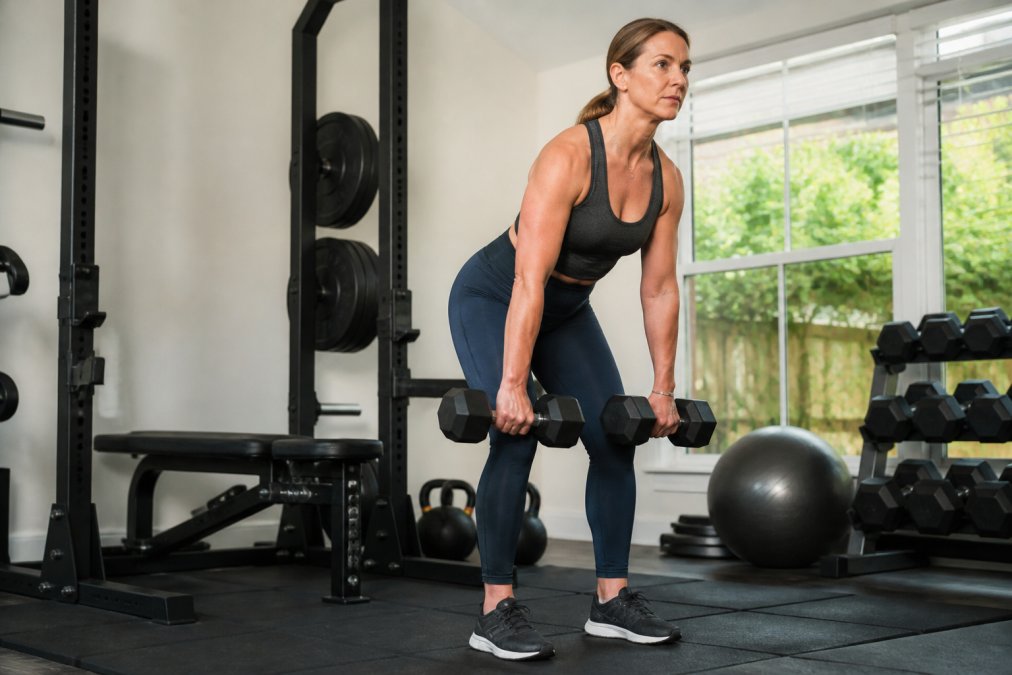
There is no “best exercise” for peri-menopause, but it is highly recommended to prioritise strength training even if you’ve never lifted weights before it’s not too late to start.
Resistance Training to Preserve Lean Muscle Mass
Resistance training is the single most important exercise for perimenopausal women. Strength training preserves and builds lean muscle mass. More lean muscle means a higher basal metabolic rate, better insulin sensitivity, and improved body composition.
Effective resistance training requires progressive overload: consistently challenging your muscles with increasing resistance over time. A practical framework:
- Frequency: Start with 2-3 sessions per week, build to 3-4.
- Focus: Compound movements (squats, deadlifts, rows, presses) that recruit multiple muscle groups
- Intensity: Working at a level where the last 2-3 reps of each set feel genuinely difficult
- Recovery: At least one rest day between sessions targeting the same muscle groups
Aerobic Activity and NEAT: Moving More Without Burning Out
Moderate-intensity cardio, brisk walking, cycling, swimming, supports cardiovascular health and mood regulation without the cortisol spike of high-intensity training. According to the American Heart Association's guidelines on physical activity for women, moderate aerobic activity provides substantial cardiovascular benefits with a much lower stress burden.
The underrated strategy is non-exercise activity thermogenesis, or NEAT, all the calories you burn through daily movement that is not formal exercise. For most women, NEAT accounts for more daily calorie burn than structured workouts. Practical ways to increase NEAT: take a 10-minute walk after meals, stand during phone calls, park farther away, or break up sitting time with a 2-minute movement break every hour.
Exercise Type | Frequency | Cortisol Impact | Primary Benefit |
|---|---|---|---|
Resistance training | 3-4x per week | Low to moderate | Muscle preservation, metabolic rate |
Moderate cardio | 2-3x per week | Low | Cardiovascular health, mood |
High-intensity cardio | Max 1x per week | High | Conditioning (use sparingly) |
NEAT (daily movement) | Daily | Minimal | Calorie burn, metabolic health |
Perimenopause Diet Plan: Nutrition That Supports Fat Loss
Nutrition during perimenopause is not about eating less. It is about eating differently. The hormonal changes affecting insulin sensitivity, muscle preservation, and appetite regulation require a specific nutritional approach.
Protein Intake and Macro-Nutrient Ratios for Perimenopause
Protein intake is the single most important nutritional lever for perimenopausal women. Adequate protein preserves lean muscle mass during a caloric deficit, supports satiety, and has a higher thermic effect than carbohydrates or fat. A practical framework:
- Protein: Aim for roughly 1.4-1.6g of protein per kilo of body weight daily. For a 90kg woman thats between 126g-144g protein a day.
- Carbohydrates: Focus on low-glycemic index sources (vegetables, legumes, whole grains) that produce a slower blood sugar response.
- Fat: Healthy fats from avocado, olive oil, and fatty fish support hormonal function and satiety.
Nutritional density matters more during perimenopause than at any previous life stage. Calories need to carry more work, supporting bone density, hormonal production, and muscle synthesis simultaneously.
Intermittent Fasting vs. Consistent Meal Timing
Intermittent Fasting is just another way of putting yourself in a calorie deficit. The benefits of fasting is the same as a regular deficit. For hormonal health and energy levels I don’t advise using intermittent fasting unless you feel great training whilst fasting and you feel well fuelled and supported.
The Psychological Barriers Behind Perimenopause Weight Loss Resistance
Weight loss resistance during perimenopause is not always hormonal. Sometimes it is behavioral. All-or-nothing thinking, emotional eating, self-sabotage, and perfectionism operate underneath the surface of every food decision and training session.

A common pattern: a woman follows her plan perfectly for two weeks, has one difficult day, eats off-plan, decides she has "ruined it," and stops entirely. The diet did not fail. The thinking pattern did. Emotional eating becomes more prevalent during perimenopause because hormonal fluctuations affect mood, anxiety levels, and stress tolerance, making food a more accessible coping mechanism. Recognizing this pattern without judgment is the first step.
Coach Justine's approach addresses these psychological barriers directly, working on the thinking and behavioral patterns underneath food and training choices. This is why her clients do not just lose weight; they stop the starting-over cycle for good.
Sleep Hygiene and Stress Management for Body Composition
Poor sleep is one of the most underestimated drivers of weight gain during perimenopause. Insufficient sleep disrupts hunger-regulating hormones, increases cortisol, reduces insulin sensitivity, and impairs the recovery that makes resistance training effective. According to the CDC's sleep and chronic disease research, adults who consistently sleep fewer than 7 hours per night show significantly worse metabolic health markers than those who sleep 7-9 hours.
Sleep hygiene practices that help during perimenopause: keep the bedroom cool, avoid alcohol in the evening, limit screens for 60 minutes before bed, maintain a consistent sleep and wake time, and consider magnesium glycinate in the evening (discuss with your healthcare provider).
Stress management is equally non-negotiable. Chronic stress keeps cortisol elevated, which directly undermines fat loss efforts. Practices like breathwork, walking in nature, journaling, and setting firm boundaries on work hours are part of the fat loss strategy.
Building Sustainable Habits That Outlast the Menopause Transition
The postmenopausal years are coming. The habits you build now determine what your body looks and feels like on the other side of this transition. Sustainable habits are not about willpower, they are about reducing the friction between your intentions and your actions.
Start smaller than feels necessary. A 10-minute strength session done consistently beats a 60-minute session done sporadically. Consistency is the variable that matters most.
Build habits onto existing behaviors. Eating protein at breakfast is easier to maintain if it attaches to a habit you already have, like making coffee, rather than requiring an entirely new routine.
Track behavior, not just outcomes. The scale is a lagging indicator. Tracking whether you hit your protein target, completed your workouts, and slept 7+ hours gives you actionable data on the inputs you control.
The women who keep their results after perimenopause are not the ones who followed the strictest plan. They are the ones who built genuine self-trust around food and follow-through. This is exactly what Coach Justine has helped over 600 perimenopausal women achieve across 12+ years of coaching. The program's 95% success rate is built on sustainable habits and the mindset work that makes those habits stick.
For more on what this approach looks like in practice, the North American Menopause Society's guidance on lifestyle changes during perimenopause provides a useful clinical framework that aligns with a whole-person approach to weight management during this phase.
Perimenopause weight loss is genuinely harder than it was before, but it is absolutely achievable when you work with your biology rather than against it. Most programs hand you a meal plan and a workout schedule without addressing the hormonal context or the behavioral patterns that determine whether you actually follow through. Coach Justine's 1:1 coaching program is built specifically for this phase of life, combining evidence-based nutrition and strength training with the mindset and behavioral work that makes results last. Apply for 1:1 coaching and build the body and habits that carry you well beyond the menopause transition.
Frequently Asked Questions
Can you lose belly fat during perimenopause?
Yes, though it takes a different approach than in your 30s. Estrogen decline shifts fat storage toward the abdomen, so targeting visceral fat requires a combination of resistance training, a caloric deficit built around high protein intake, improved sleep, and managed cortisol levels. Quick-fix diets rarely work here because they accelerate muscle loss and worsen metabolic slowdown. Consistent, sustainable habits produce real and lasting results.
What is the best diet for perimenopause weight loss?
There is no single perfect perimenopause diet plan, but the evidence consistently points to higher protein intake (to protect lean muscle mass), foods with a lower glycemic index (to support insulin sensitivity), and adequate fiber and nutritional density. Extreme caloric restriction tends to backfire by lowering basal metabolic rate and increasing food noise. A moderate caloric deficit built around whole foods and consistent meal timing outperforms any short-term protocol.
Does perimenopause weight gain ever go away?
Weight gained during perimenopause does not reverse automatically after the menopause transition, but it absolutely can be lost. The hormonal environment stabilizes postmenopausally, which can make weight management slightly more predictable. Women who build sustainable habits around strength training, protein-focused eating, sleep hygiene, and stress management during perimenopause are well-positioned to maintain a healthy body composition long after the transition ends.
How does estrogen decline affect metabolism?
Estrogen plays a direct role in regulating the endocrine system, insulin sensitivity, and where the body stores fat. As estrogen declines during perimenopause, the body becomes more prone to storing visceral fat around the abdomen, basal metabolic rate drops partly due to accelerating muscle loss (sarcopenia), and blood sugar regulation becomes less efficient. These changes mean the same eating and exercise habits that worked at 35 often stop producing results by the mid-40s.