 how-to
How to Fix Perimenopause Energy Crashes: 7 Proven Strategies
Table of Contents
- Understanding Perimenopause Energy Crashes vs. Chronic Fatigue
- How Hormonal Fluctuations Trigger Energy Crashes
- Blood Sugar Management for Perimenopause Energy Stability
- Perimenopause Sleep Hygiene Tips to Restore Nighttime Recovery
- Perimenopause Fatigue Supplements and Nutritional Support
- Workplace Productivity Strategies When Energy Crashes Strike
- Tracking Tools and When to See a Doctor
- Conclusion: Building Sustainable Energy for Life
Last Updated: August 15, 2026
Understanding Perimenopause Energy Crashes vs. Chronic Fatigue
Perimenopause energy crashes are sudden, overwhelming drops in energy, the kind where your body feels like it's moving through water and brain fog rolls in thick. What makes this different from general fatigue: energy crashes are episodic and tied to your hormonal fluctuations. You might feel fine at breakfast, then hit a wall by 2 PM. Chronic fatigue, by contrast, is relentless, doesn't come and go with your cycle, and rest doesn't fix it. If you're experiencing constant exhaustion that doesn't improve with sleep, see your doctor rather than self-manage alone.
During perimenopause, your hormones swing wildly, estrogen and progesterone aren't declining smoothly, they're bouncing all over the place. Your body never quite knows what to expect, and your energy pays the price. At Coach Justine, we've worked with hundreds of women navigating this pattern, and the good news is that once you understand what's driving it, you can do something about it.
The distinction matters because it shapes your strategy. Energy crashes respond well to targeted interventions: blood sugar management, sleep quality improvements, strategic movement, and stress reduction. Chronic fatigue might need medical investigation first.
How Hormonal Fluctuations Trigger Energy Crashes
Perimenopause energy crashes happen because your hormones directly control your energy metabolism, sleep quality, and stress resilience.
Estrogen and progesterone regulate how your body uses glucose for energy. When estrogen drops, your cells become less sensitive to insulin, which means your blood sugar swings become more dramatic. Progesterone, which naturally promotes sleep and calm, is also fluctuating, some days you have enough to feel grounded, other days you're running on fumes.
Your circadian rhythm, controlled partly by estrogen, becomes unreliable when estrogen levels drop. Your melatonin production suffers, you might sleep poorly at night, then crash during the day. It's a vicious cycle: poor sleep drives poor energy management, which makes the next night's sleep even worse.
Cortisol, your stress hormone, is supposed to peak in the morning and decline through the day. But during perimenopause, cortisol patterns become erratic. You might wake up already exhausted because your cortisol didn't rise properly, or you might have a late-afternoon surge that keeps you wired when you should be winding down.
This is why generic "get more sleep" advice doesn't always work. You could be sleeping eight hours and still crashing at 3 PM because the quality of that sleep is poor or your blood sugar is destabilizing your energy. Understanding the hormonal driver helps you target the actual problem.
Blood Sugar Management for Perimenopause Energy Stability
Stable blood sugar is non-negotiable during perimenopause. When your glucose levels spike and crash, your energy crashes with them, and your hormonal instability makes blood sugar control harder than before.
The goal isn't perfection, it's preventing the dramatic swings that trigger crashes. Here's what works:
Eat protein and fiber at every meal. Protein slows glucose absorption and keeps you full longer. Fiber does the same. A breakfast of just toast will spike your glucose and leave you crashed by 10 AM. Add eggs or nuts, and you'll stay stable for hours.
Eat in a pattern, not randomly. Eating at roughly the same times each day helps your metabolism anticipate and regulate glucose more effectively.
Choose lower-glycemic options when possible. This doesn't mean eliminating carbs, you need them for fuel. It means choosing whole grains over refined ones and being strategic about when you eat simple carbs. A piece of fruit with almond butter is a different blood sugar experience than fruit alone.
Watch the afternoon snack trap. Many women crash around 3 PM and reach for something sugary. It helps for 20 minutes, then the crash is worse. If you're hungry in the afternoon, eat something with protein and fat: cheese, nuts, hard-boiled eggs.

Many women find that addressing blood sugar alone reduces their energy crashes by 40-50%.
Perimenopause Sleep Hygiene Tips to Restore Nighttime Recovery
Sleep quality during perimenopause is complicated. Your hormones are affecting your ability to fall asleep, stay asleep, and reach the deep sleep stages where your body recovers.
You can't force yourself to sleep, but you can set conditions that make it more likely:
Keep your bedroom cool. Progesterone naturally lowers your body temperature and promotes sleep. When it drops, your body temperature regulation gets choppy. A cool room (around 65-68°F) helps compensate. Use breathable bedding.
Dim the lights starting two hours before bed. Bright light suppresses melatonin production, and your melatonin is already unreliable. This means phones, tablets, and overhead lights off, or use blue-light filters if you must use screens.
Develop a wind-down routine that works for you. Some women sleep better after gentle movement like stretching or walking. Others need complete stillness. Some need to journal. Find what genuinely calms your nervous system, then do it consistently.
Watch your caffeine timing. Caffeine has a half-life of 5-6 hours. Afternoon coffee can be the difference between sleeping through and waking at 2 AM. Cut off caffeine by 2 PM.
Consider magnesium if sleep is particularly rough. Many women find magnesium glycinate helpful for both sleep quality and muscle relaxation.
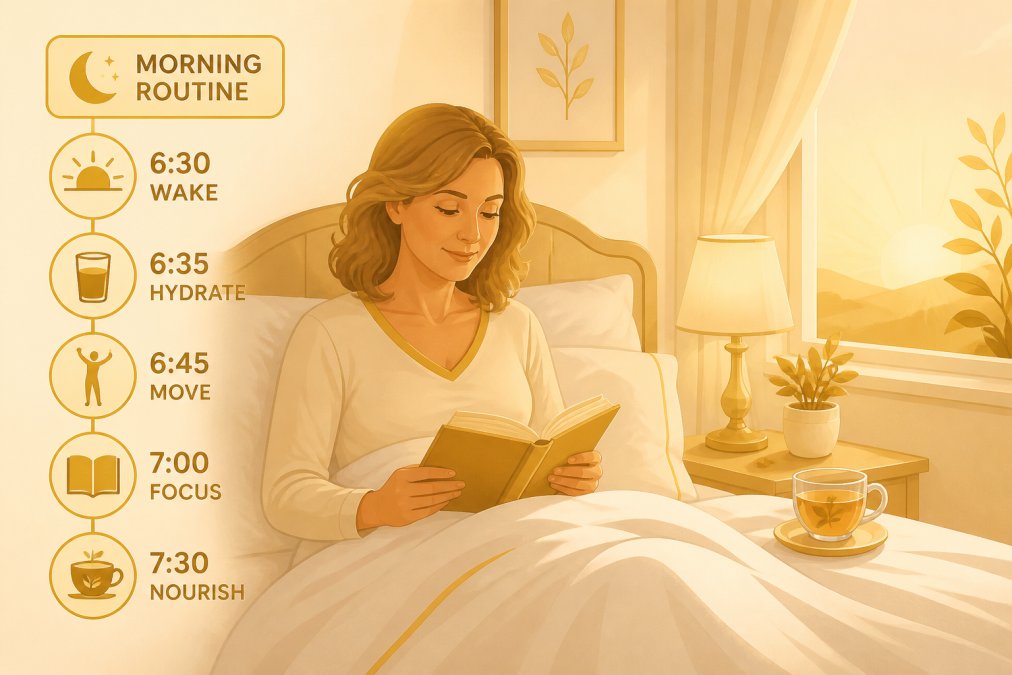
Better sleep is foundational. Everything else becomes easier when your body is actually recovering at night.
Perimenopause Fatigue Supplements and Nutritional Support
Supplements work best when your foundation is solid: your blood sugar is stable, your sleep is decent, and your stress is manageable. They're the layer you add on top, not the base.
Certain nutrients are commonly depleted during perimenopause and directly affect energy:
Iron. Perimenopause often brings heavier periods, which means blood loss and potential iron depletion. Low iron makes you feel exhausted no matter how much you sleep. A simple blood test can tell you if this is your issue. If it is, supplementing or eating more iron-rich foods like red meat, spinach, and lentils can be transformative.
B vitamins. Your B vitamins are involved in energy metabolism. B12 and folate are particularly important. Many women benefit from a B-complex supplement or get these from eggs, leafy greens, and whole grains.
Omega-3 fatty acids. These support brain function, reduce inflammation, and help with mood stability. Get them from fatty fish, walnuts, and flaxseeds, or supplement if you prefer.
Adaptogenic herbs like ashwagandha and rhodiola. These help your body manage stress and adapt to hormonal changes. They're not stimulants. Instead, they help your nervous system stay calm, which reduces the constant low-level stress that drains your energy.
The honest truth: supplements can help, but they're not magic. A woman with perfect blood sugar, great sleep, and low stress will feel better than a woman taking every supplement while running on four hours of sleep and high stress.
Workplace Productivity Strategies When Energy Crashes Strike
Energy crashes don't respect your calendar. You can't always prevent them, but you can work around them:
Schedule your hardest work in the morning. This is when your energy is most stable and your cortisol is naturally higher. If you crash at 3 PM, don't schedule important meetings then. Do it at 9 AM.
Build in a movement break mid-morning. A 10-minute walk, stretching, or climbing stairs can stabilize your blood sugar and reset your energy for hours.
Eat lunch at a consistent time. Skipping lunch or eating at random times makes afternoon crashes worse. A balanced lunch eaten at roughly the same time each day keeps your afternoon more stable.
Batch similar tasks. If you're going to be low-energy at 3 PM anyway, do administrative work and emails then. Save creative or high-focus work for when you're naturally sharper.
Give yourself permission to work differently on crash days. On those days, you might need to shift your schedule, lower your expectations, or ask for flexibility. This is working with your body instead of against it.
Once you address the underlying causes, your crashes become less frequent and less severe.
Tracking Tools for Clarity
It’s hard to track if you don’t know what you’re looking for or why it matters.
If you want to accelerate your results and a proven evidence-based, structured approach to identifying your personal patterns, the Free Peri Protocol is designed to pin point exactly what’s keeping you stuck and how to change that.
Conclusion: Building Sustainable Energy for Life
Perimenopause energy crashes feel inevitable, but they're not. They're a symptom of hormonal instability, and that instability is addressable.
Start with the foundation: stable blood sugar through consistent, balanced eating. Add better sleep through cool rooms and consistent routines. Manage stress so your nervous system isn't constantly activated. Then layer in supplements and tracking if needed.
If you've tried these approaches and still feel stuck, or if you're struggling with emotional eating, perfectionism, or all-or-nothing thinking that keeps you cycling through diets, deeper work helps. The HER Aligned Coaching Membership is designed for busy perimenopausal women who want to address the behavioral and mindset patterns that sabotage their energy and health goals. Through evidence-based coaching, you'll build sustainable habits that actually stick.
Frequently Asked Questions
What causes energy crashes during perimenopause?
Energy crashes during perimenopause stem from hormonal fluctuations, particularly declining estrogen and progesterone. These hormones regulate sleep quality, blood sugar stability, and cortisol levels. As they fluctuate unpredictably, your circadian rhythm becomes disrupted, sleep suffers, and your body struggles to maintain steady energy. Combined with poor sleep recovery, blood sugar swings, and increased stress on your adrenal system, you experience sudden afternoon crashes or all-day exhaustion that feels disproportionate to your actual activity level.
How long does perimenopause fatigue last?
Perimenopause typically lasts 4 to 10 years, and energy crashes can persist throughout this transition. However, their severity and frequency are not fixed—they improve significantly when you address underlying hormonal fluctuations, sleep quality, blood sugar stability, and stress management. Many women report noticeable improvement within 6 to 12 weeks of consistent lifestyle changes, though the transition itself continues. Working with a menopause specialist or coach can help you manage symptoms effectively throughout perimenopause rather than waiting for them to resolve on their own.
What vitamins or supplements help with perimenopause fatigue?
Common supplements that support energy during perimenopause include magnesium (supports sleep and cortisol regulation), B vitamins (energy metabolism), iron (if deficient), vitamin D (mood and energy), and adaptogenic herbs like ashwagandha and rhodiola (stress and adrenal support). However, supplementation works best alongside sleep hygiene, blood sugar management, and stress reduction—not as a replacement. Before starting any supplement, test your current nutrient levels and consult your doctor or a registered dietitian to ensure you're addressing actual deficiencies rather than relying on supplements alone.
How do I know if I need medical help for perimenopause energy crashes?
See a doctor if your energy crashes are accompanied by chest pain, shortness of breath, severe brain fog affecting work, persistent insomnia despite good sleep habits, or if lifestyle changes show no improvement after 8 to 12 weeks. Also seek evaluation if you suspect underlying thyroid dysfunction, anemia, or sleep apnea—all common in perimenopause and treatable with medical support. A NAMS (North American Menopause Society) practitioner or menopause specialist can help distinguish between normal hormonal shifts and conditions requiring intervention, ensuring you get the right support.