 how-to
Personalized Health Coaching for Perimenopause
Table of Contents
- Why Standard Diets Fail During Perimenopause
- What Personalized Health Coaching for Perimenopause Actually Addresses
- Perimenopause Mindset Coaching: Breaking the All-or-Nothing Cycle
- Coaching for Perimenopause Weight Loss: Beyond Calorie Counting
- How to Stop Yo-Yo Dieting in Perimenopause
- Perimenopause Fatigue Management Through Lifestyle Intervention
- What to Expect from a Personalized Coaching Partnership
- Conclusion
Last Updated: August 23, 2026
You've tried everything. The meal plans, the apps, the personal trainers, the nutritionists, the challenges. You lose the weight, then gain it back. You feel energised for a month, then you're exhausted again. You commit to consistency, then you sabotage yourself three weeks in.
The problem isn't your willpower. It's that you're trying to follow a generic approach designed for a body that isn't yours.
Perimenopause rewires your metabolism, your energy, your hunger signals, your mood regulation. Standard diets fail during perimenopause because they don't account for the hormonal fluctuations that are actually driving your choices, your energy crashes, and your weight. They treat your body like it's the same as it was at 25. It isn't.
This is where personalized health coaching for perimenopause becomes the difference between another failed attempt and lasting change.
Why Standard Diets Fail During Perimenopause
Your body is not broken. The diet is.
When hormonal fluctuations shift your oestrogen and progesterone, your baseline metabolic needs change (peer-reviewed research). Your hunger hormones ghrelin and leptin respond differently (peer-reviewed research). Your cortisol patterns shift. Your sleep quality degrades. Your cravings intensify. A calorie is no longer just a calorie because the hormonal environment that determines how your body uses those calories has fundamentally changed.
A standard diet assumes a stable hormonal baseline and counts calories the same way it did when you were younger, ignoring that your energy needs at 3pm on a Wednesday during your follicular phase are completely different from your energy needs during your luteal phase.
This is why restriction fails. When you're running a calorie deficit during perimenopause without understanding your hormonal cycle, you're fighting against your biology. Your body fights back. Cravings intensify. Energy crashes. You become irritable. After weeks of white-knuckling your way through willpower, you snap. You eat the entire packet of biscuits. You feel like you've failed. You start over on Monday.
You haven't failed. The approach has.
Personalized health coaching for perimenopause addresses this directly. Instead of applying a one-size-fits-all protocol, a coach works with your specific hormonal patterns, your energy rhythms, your emotional triggers, and your lifestyle constraints. The nutrition guidance shifts based on where you are in your cycle. The training intensity adjusts based on your recovery capacity. The calorie targets account for your actual metabolic needs, not an average. The result isn't deprivation. It's alignment.
What Personalized Health Coaching for Perimenopause Actually Addresses
Personalized health coaching for perimenopause is not a meal plan. It's a partnership built to address the specific patterns, beliefs, and behaviours that have kept you stuck in the cycle of starting over.
A coach working with you on perimenopause addresses three interconnected layers: your mindset patterns, your lifestyle intervention strategy, and your body's actual needs.
The mindset layer addresses the thinking patterns underneath your choices. This is where most diets fail. They ignore the fact that you sabotage yourself. They don't account for the perfectionism that makes you all-or-nothing. They don't touch the emotional eating that happens when you're stressed or tired. A coach trained in trauma-informed mindset work helps you recognise these patterns, understand why they exist, and rebuild the self-trust that allows you to follow through without white-knuckling.
The lifestyle intervention layer is about building sustainable habits that fit your actual life, not an imaginary version where you have two hours daily for meal prep and training. A coach helps you identify your non-negotiable constraints, your energy capacity, your preferences, then designs an approach that works within those real boundaries.
The physiological layer accounts for your hormonal fluctuations, your metabolic needs, your recovery capacity, and your actual nutrient requirements during perimenopause. A coach helps you understand how your body is responding, what adjustments need to happen, and why.
When these three layers are aligned, you don't just lose weight. You lose the fatigue. You rebuild your confidence. You develop genuine self-trust around food and follow-through. You stop the cycle of starting over.
Perimenopause Mindset Coaching: Breaking the All-or-Nothing Cycle
The most common pattern in women cycling through diets is this: you're brilliant at starting. You're terrible at staying.
You commit to a plan. You're motivated, focused, disciplined. You follow it perfectly for two weeks. Then life happens. You miss a training session. You eat something not on the plan. You feel like you've failed. Because in your mind, imperfect is the same as failed. So you abandon the whole thing. You eat everything. You don't train. You wait until Monday to start again.
This isn't a discipline problem. This is a thinking problem.
All-or-nothing thinking is the pattern where anything less than perfect is treated as complete failure. It's the belief that one imperfect choice means the entire week is ruined. This pattern keeps you trapped because perfection is impossible. Life is messy. You will miss sessions. You will eat foods not on a plan. You will have weeks where your energy is too low to train. If your definition of success requires perfection, you will always fail.
Perimenopause mindset coaching addresses this directly by helping you recognise the pattern, understand where it comes from, and rebuild your definition of consistency. Consistency doesn't mean perfect. It means showing up imperfectly, repeatedly. It means one missed session doesn't erase your week. It means one unplanned meal doesn't destroy your progress. It means you can adjust the plan based on what your body actually needs that week, and that adjustment is part of the process, not a failure.

A coach helps you rebuild self-trust by creating evidence. You follow through on small commitments. You adjust when needed without spiralling. You notice that progress isn't linear. You see that your body responds to consistency, not perfection. Over weeks and months, you develop genuine confidence in yourself. The food noise quiets. The self-sabotage stops. You become someone who keeps commitments to herself.
Learn more about HER Aligned here →
Coaching for Perimenopause Weight Loss: Beyond Calorie Counting
Weight loss during perimenopause isn't about eating less. It's about eating differently.
The hormonal shifts of perimenopause change your metabolic needs, your hunger signals, and your body's ability to use energy efficiently. A standard approach that worked at 30 won't work at 45 because your oestrogen and progesterone patterns are different. Your cortisol response to stress is different. Your sleep quality is different. Your nutrient requirements are different.
Coaching for perimenopause weight loss moves beyond calorie counting because calorie counting ignores these hormonal realities. Instead, a coach helps you develop awareness of what your body actually needs. This might mean eating more during your luteal phase when your metabolic needs genuinely increase, or prioritising protein and micronutrient density over restriction. It might mean understanding that some weight fluctuation is hormonal and normal, not a sign of failure.
The focus shifts from restriction to nourishment. From deprivation to adequacy. From fighting your body to working with it. A coach trained in evidence-based nutrition helps you understand your actual calorie and nutrient needs during perimenopause, then helps you build the skills to meet those needs consistently. You're developing awareness of how different foods affect your energy, your mood, your sleep, your cravings. When weight loss happens from this foundation, it stays off because you've been building sustainable habits and learning to trust your body's signals.
How to Stop Yo-Yo Dieting in Perimenopause
Yo-yo dieting is the pattern of losing weight, regaining it, losing it again, and repeating. It's exhausting. It's demoralising. And it's the inevitable outcome of approaching perimenopause with a standard diet mentality.
The cycle works like this: you restrict calories aggressively. You lose weight quickly. Your body adapts. Your hunger increases. Your willpower depletes. You eventually can't sustain the restriction. You regain the weight, usually plus extra. You feel like you failed. You try again. You repeat.
The reason this cycle is so common during perimenopause is that aggressive restriction directly conflicts with your hormonal needs. When you're in a significant calorie deficit during perimenopause, your cortisol rises. Your sleep worsens. Your recovery suffers. Your hunger signals amplify. You're fighting your biology, and your biology wins.
How to stop yo-yo dieting isn't about finding the perfect diet. It's about fundamentally changing your approach to weight loss. A coach helps you move from restriction-based thinking to sustainability-based thinking. Instead of asking "How much can I restrict without completely suffering?", the question becomes "What approach can I maintain indefinitely?" This means smaller calorie deficits, adequate nutrition, training that supports your recovery, and addressing the emotional eating and self-sabotage patterns that make restriction unsustainable. The weight loss happens more slowly. But it stays off because you're building a sustainable way of living.
Perimenopause Fatigue Management Through Lifestyle Intervention
Fatigue during perimenopause isn't laziness. It's a legitimate physiological response to hormonal fluctuations, poor sleep quality, inadequate recovery, and often, undereating relative to your actual needs.
When your oestrogen drops, your sleep architecture changes (peer-reviewed research). You have less deep sleep. You wake more frequently. Your body doesn't recover fully. You wake tired. Throughout the day, your energy crashes because your body is running on insufficient recovery. You reach for coffee, sugar, stimulants to push through. You feel wired but tired. You can't sleep properly. The cycle continues.
Perimenopause fatigue management through lifestyle intervention addresses the root causes. Sleep hygiene becomes a priority. This might mean adjusting your training intensity so you're not over-recovering, or optimising your nutrition so you're actually fuelling your body adequately. It might mean managing stress through specific practices that lower cortisol. A coach helps you identify which factors are most impacting your energy and addresses them systematically. Energy improves consistently over weeks. The fatigue that felt permanent starts to lift. You have energy through the afternoon. You sleep better. You wake feeling rested.
What to Expect from a Personalized Coaching Partnership
A personalized coaching partnership for perimenopause isn't a transaction. It's a relationship built on specific outcomes and genuine partnership.
In the beginning, a coach works to understand you completely. Your history with dieting. Your current habits and constraints. Your hormonal patterns and symptoms. Your emotional relationship with food. Your training experience. Your lifestyle. Your goals. A coach trained in perimenopause asks specific questions to understand the patterns underneath your current situation. Many coaches start by offering a free assessment, such as the Free Peri Protocol, which helps you identify your specific perimenopause patterns before committing to a full partnership.
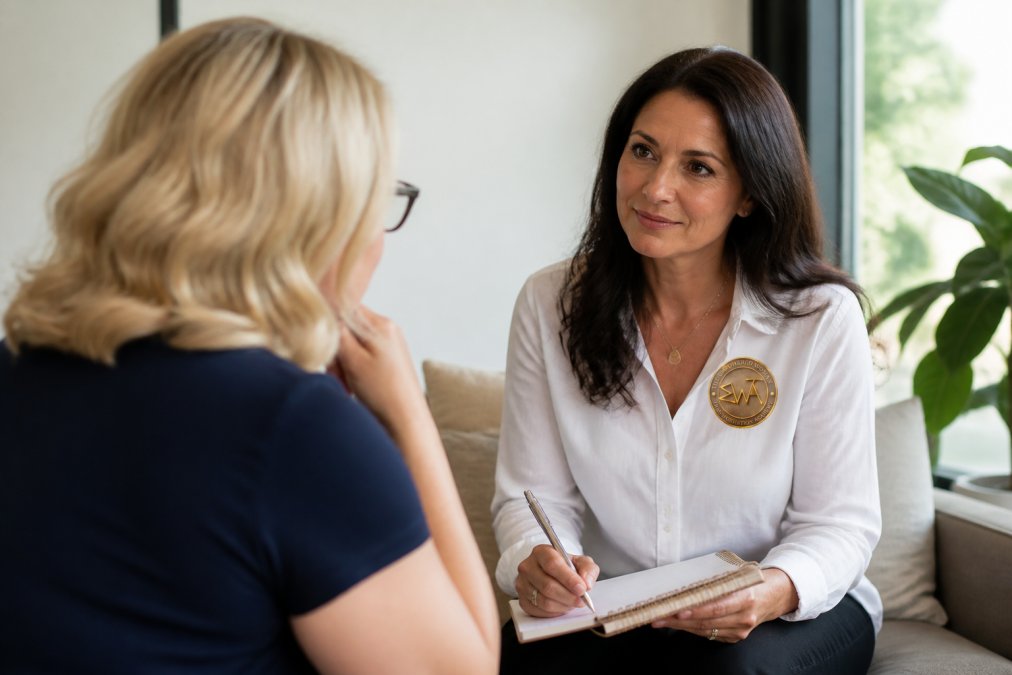
From there, the partnership becomes about building awareness and skills. A coach helps you track your symptoms, your energy, your patterns as information. You start to see the connections. You notice that your energy crashes when you skip breakfast. You notice that your sleep improves when you train in the morning. You notice that your cravings intensify during your luteal phase. This awareness is the foundation of sustainable change.
Your coach then helps you build specific skills. How to adjust your nutrition based on your cycle. How to recognise and interrupt self-sabotaging patterns before you act on them. How to train in a way that supports your recovery. How to manage stress and emotional eating. How to follow through on commitments without perfectionism.
The coaching happens through regular check-ins, usually weekly or fortnightly. Your coach reviews your progress, helps you troubleshoot obstacles, adjusts the approach based on what's actually working for your body, and holds you accountable to your commitments. Over weeks and months, you notice changes. Your energy stabilises. Your sleep improves. Your weight shifts. Your cravings quiet. Your confidence in yourself rebuilds. You stop the cycle of starting over. You become someone who keeps commitments to herself.
The goal of personalized health coaching for perimenopause is to make the coaching unnecessary. A coach teaches you how to coach yourself. You develop the awareness, the skills, and the self-trust to maintain your results independently. For those ready to commit to ongoing support, the HER Aligned Coaching Membership provides regular check-ins and accountability to sustain your progress long-term.
| Coaching Element | What It Includes | Expected Outcome |
|---|---|---|
| Initial Assessment | Comprehensive review of health history, habits, goals, hormonal patterns | Clear understanding of your specific situation and root causes |
| Personalised Protocol | Nutrition and training approach tailored to your cycle and needs | Sustainable habits that fit your actual life |
| Mindset Coaching | Addressing all-or-nothing thinking, emotional eating, self-sabotage | Rebuilt self-trust and freedom from food noise |
| Regular Check-ins | Weekly or fortnightly accountability and adjustment | Consistent progress and problem-solving in real time |
| Skill-Building | Training in awareness, nutrition, stress management, follow-through | Independence and capability to maintain results long-term |
Perimenopause changes your body. It doesn't have to change your life. When you work with someone who understands the specific hormonal shifts you're navigating, who addresses the thinking patterns keeping you stuck, and who builds a sustainable approach that actually fits your life, lasting change becomes possible. If you're ready to stop starting over and build the sustainable approach that finally sticks, consider exploring how a personalised coaching partnership could work for your specific situation. Apply for 1:1 Coaching.
Frequently Asked Questions
Q: How does personalized health coaching for perimenopause differ from a standard nutrition app or meal plan?
A: Standard apps and meal plans treat perimenopause as a calorie problem. Personalized health coaching for perimenopause addresses the behavioural patterns underneath your choices: perfectionism that keeps you stuck in all-or-nothing cycles, emotional eating that no willpower fixes, self-sabotage tied to limiting beliefs about your body, and the hormonal fluctuations that shift your metabolism and energy. A coach works with your actual life, your specific barriers, and the thinking patterns driving your decisions, not a generic template that worked for someone else.
Q: Can health coaching actually help with perimenopause weight loss and food noise, or is it just therapy?
A: Health coaching for perimenopause weight loss combines evidence-based nutrition guidance, strength training, and mindset work specifically designed for hormonal shifts. It is not therapy. A coach teaches you how to recognize self-sabotaging patterns, rebuild self-trust around food and follow-through, and develop the behavioural skills that create lasting fat loss. Your results are measurable: weight stabilization, sustained energy, eliminated food noise, and the confidence to maintain your results for life without cycling back to diets.
Q: What if my schedule is chaotic and I can't be perfect with a coaching program?
A: Personalized coaching for perimenopause is built for real life, not perfection. A coach helps you work within your constraints, not against them. You learn how to build habits that fit your actual schedule, manage hormonal fluctuations without rigid meal plans, and stay consistent even when life gets messy. The goal is to become a woman who maintains her results through self-trust and sustainable patterns, not someone who depends on perfect execution.
Q: How do I know if I'm actually in perimenopause, and is coaching right for me now?
A: Perimenopause typically begins in the mid-40s but can start earlier, with symptoms including irregular periods, brain fog, vasomotor symptoms (hot flushes and night sweats), unexplained weight gain, and fatigue. You do not need to wait for severe symptoms. If you are experiencing hormonal fluctuations affecting your energy, weight, or mood, personalized health coaching can help you develop evidence-based strategies now. Many women benefit from coaching support during the transition, not just at the end of it.