 ultimate-guide
Sustainable Weight Loss After Forty: What Actually Works
Table of Contents
- Why Everything You Have Tried Has Not Worked
- The Real Causes of Perimenopause Weight Gain
- Breaking Yo-Yo Dieting Cycles for Good
- The Metabolic Shift: Why Your Body Responds Differently Now
- Strength Training for Women Over Forty: Your Non-Negotiable
- Mindset Shifts for Fat Loss That Last
- What Sustainable Weight Loss After Forty Actually Looks Like
- Your Next Step Toward Lasting Change
- Frequently Asked Questions
Last Updated: September 6, 2026
You have done every diet, joined every challenge, downloaded every app. You lose the weight, feel fantastic for a few months, and then life happens. The busy season at work, your daughter's exam stress, one glass of wine too many, and suddenly the sustainable weight loss after forty you thought you had secured slips away again. You are not lacking willpower, discipline, or effort. You are running on a plan designed for a body and brain that no longer exist.
At Coach Justine, we have spent 12+ years helping over 600+ perimenopausal women keep their results for life, who arrive with the same story: they are exhausted by starting over. The real problem is not that you failed the diet. The diet failed you because it never addressed the hormonal, metabolic, and psychological shifts happening beneath the surface. Sustainable weight loss after forty is not about eating less and moving more. It is about rebuilding your body's metabolic machinery and your mind's relationship with food so the results finally stick.
Why Everything You Have Tried Has Not Worked
Your history of dieting is not a character flaw; it is a series of well-intentioned strategies colliding with an uneducated approach to your changing physiology. Every restrictive plan you followed triggered your body's starvation response, lowering your metabolic rate and increasing cortisol. The result is a body that has learned to defend its fat stores fiercely.
Most plans ignore that your hormonal fluctuations are now driving the bus. What worked at 30 works against you now because your oestrogen decline alters insulin sensitivity and how your body partitions energy. You have been fighting your biology instead of working with it, which is why the scale moves and then stalls, and why the weight returns with interest.
The Real Causes of Perimenopause Weight Gain
Perimenopause weight gain causes are rooted in a perfect storm of hormonal shifts, not moral failure. As oestrogen and progesterone fluctuate and eventually decline, your body becomes more resistant to insulin and more prone to storing fat viscerally, the deep belly fat linked to metabolic health risks (peer-reviewed research). This is a physiological reality, not a punishment for ageing.
Compounding this, declining oestrogen affects leptin signalling, which regulates hunger and fullness (PubMed). You are not imagining the increased food noise or the way cravings hit harder before your cycle. Your sleep quality also deteriorates, which raises ghrelin and makes high-calorie foods more appealing (the CDC). Addressing these causes requires strategies that respect your hormonal environment rather than fighting it with sheer willpower.
Breaking Yo-Yo Dieting Cycles for Good
Breaking yo-yo dieting cycles demands that you stop treating food as something to be conquered. The all-or-nothing mindset that has you either perfectly clean or completely off-plan is the engine of the cycle. Perfectionism is not consistency; it is rigidity that snaps under the pressure of real life.
The alternative is building flexible, sustainable habits that can survive a hectic week. This means learning to eat in a way that supports your blood sugar and muscle, without labelling entire food groups as off-limits. When you remove the moral weight from food, you reduce the deprivation that fuels binge episodes and the shame that follows them, creating space for self-trust to grow.
Learn more about HER Aligned here →
The Metabolic Shift: Why Your Body Responds Differently Now
Your body's energy equation has changed. Sarcopenia, the age-related loss of lean muscle mass, slows your resting metabolic rate because muscle is metabolically active tissue. If you are not actively preserving muscle, a caloric deficit will break down precious muscle along with fat, leaving you with a lower metabolic rate than when you started and a physique that is softer, not firmer.
This is why generic calorie-cutting fails. The goal is not simply weight loss but body recomposition, which requires a higher protein intake to stimulate muscle protein synthesis and protect against visceral fat accumulation. Your body now needs a strategic approach that prioritises macronutrient balance and insulin sensitivity over simple calorie maths, ensuring the weight you lose is fat, not hard-earned muscle.
Strength Training for Women Over Forty: Your Non-Negotiable
Strength training is the single most effective lever for sustainable weight loss after forty because it directly combats sarcopenia and improves how your body handles glucose. Resistance exercise creates muscle, which acts as a sponge for glucose, improving insulin sensitivity and reducing the likelihood of blood sugar spikes that lead to fat storage.
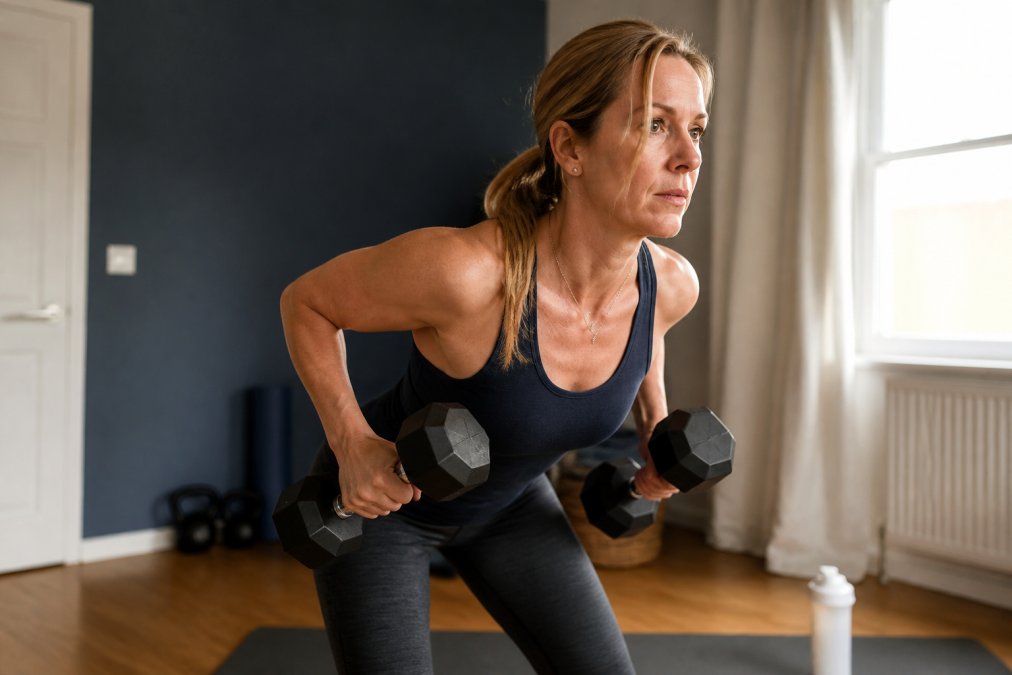
This is not about bulky biceps; it is about building a metabolic furnace. Two to three sessions per week of compound movements like squats, deadlifts, and push-ups will change your body composition more than hours of steady-state cardio. The women who lift are the women who keep the weight off and feel energised, not depleted.
Mindset Shifts for Fat Loss That Last
The mental game is where fat loss is won or lost. Your self-sabotaging behaviours, the procrastination, the emotional eating, are not signs of weakness but protective coping mechanisms that once served you. Until you address these underlying patterns, no meal plan will hold.
Mindset shifts for fat loss that last involve moving from a punitive, short-term contract with your body to a collaborative, long-term relationship. You must challenge the limiting belief that you are someone who cannot follow through. Start by building self-trust through small, kept promises to yourself, like hitting your protein target or getting your steps in. This is how you prove to your brain that you are reliable, breaking the cycle of self-sabotage at its root.
What Sustainable Weight Loss After Forty Actually Looks Like
Sustainable weight loss after forty is not a linear drop on the scale. It looks like consistent energy through the day without the 3pm crash, sound sleep, and clothes fitting better even when the scale is stubborn. It involves a caloric deficit that is small enough to be comfortable but effective, paired with a focus on whole foods, adequate fibre, and hydration.
This approach also integrates lifestyle modification: managing stress to keep cortisol in check and prioritising sleep hygiene to support your circadian rhythm. The result is a slower, steadier fat loss that preserves muscle and metabolic health, ensuring that the weight you lose stays off because your body is no longer fighting you. It is a lifestyle, not a punishment.
Learn more about HER Aligned here →
Your Next Step Toward Lasting Change
You have the knowledge now, but knowing has never been the gap. The gap is the behavioural change that happens with real structure, support, and accountability. You cannot outsource this to another app or a generic meal plan, because your problem has never been a lack of information.
The women who break the cycle work with a specialist who understands the perimenopause physiology and the psychology of self-sabotage. If you are ready to stop being the woman who starts over, the next step is to assess where you are and what is truly blocking you. Learn about the Free Peri Protocol assessment to understand your personal barriers and begin your path toward a body you trust.
The path to lasting change is not about finding more willpower; it is about dismantling the perfectionism and emotional patterns that have kept you stuck. Coach Justine's approach combines evidence-based nutrition and strength coaching with trauma-informed mindset work to address the root cause of your struggles. Build the strength, energy, and confidence to live a life you love, without the food noise and self-doubt. Apply for 1:1 Coaching with Coach Justine and become the woman who keeps her results for life.
Frequently Asked Questions
Why does weight gain accelerate during perimenopause despite no change in habits?
Declining oestrogen changes how your body responds to insulin and where it stores fat, often increasing visceral fat around the midsection. Muscle mass also drops naturally as we age, which lowers your resting metabolic rate. That means the same food and activity that maintained your weight at 35 now creates a slow surplus. Sustainable weight loss after forty depends on adjusting for these shifts, not repeating what worked a decade ago.
Why do traditional calorie-restricted diets often backfire for women over forty?
Aggressive calorie restriction raises cortisol and can worsen insulin resistance, signalling your body to hold onto fat, particularly around the middle. It also accelerates muscle loss, which further lowers your metabolic rate. When you eventually return to normal eating, your body needs fewer calories than before, so weight returns quickly. Breaking yo-yo dieting cycles means moving away from restriction and toward protein-focused meals, strength work, and blood sugar stability.
How do I distinguish between food noise and genuine physiological hunger?
Genuine hunger builds gradually, comes from the stomach, and is satisfied by any nourishing food. Food noise is sudden, specific (usually sugar or carbs), and tied to emotions, habits, or fatigue rather than an empty stomach. One practical check: ask whether a grilled chicken salad sounds acceptable. If it does, you are physiologically hungry. If only the biscuit will do, that is food noise, and no amount of willpower resolves it until you address the pattern underneath.
Is sustainable weight loss after forty realistic without giving up foods I love?
Yes, and demanding otherwise is why diets fail. Sustainable weight loss after forty is not about perfection; it is about consistency across roughly 80 percent of your choices. The women who keep results for life learn to include their favourite foods without spiralling into all-or-nothing thinking. That requires building self-trust around food, which is a skill developed through coaching, not another set of rules to follow perfectly.