 ultimate-guide
Sustainable Weight Loss for Busy Women: 2026 Guide
Table of Contents
- Why Sustainable Weight Loss Looks Different for Busy Women
- Time-Efficient Meal Prep for Weight Loss Without the Sunday Marathon
- High-Intensity Interval Training for Busy Women: Micro-Workouts That Deliver
- How to Track Macros for Weight Loss Without Obsessing Over Numbers
- Sleep, Stress Management, and Hydration: The Overlooked Pillars
- Breaking Through Weight Loss Plateaus in Women
- Building Sustainable Weight Loss Habits That Outlast Any Program
- Conclusion
Last Updated: August 8, 2026
Why Sustainable Weight Loss Looks Different for Busy Women
Sustainable weight loss for busy women is not simply eating less and moving more. At Coach Justine, we work specifically with perimenopausal women who have tried diets, apps, and plans only to return to where they started. The problem was never willpower, the approach never matched the actual biology and life circumstances of a woman in her 40s and beyond.
Busy women face a fundamentally different metabolic and hormonal landscape than the "caloric deficit plus exercise" template assumes. Sleep deprivation, chronic stress, hormonal shifts, and packed schedules all interact to make weight management genuinely harder.
The Role of Cortisol, Hormonal Balance, and Perimenopause
Cortisol is the stress hormone released when your body perceives pressure, from deadlines, difficult mornings, or insufficient sleep. Chronically elevated cortisol signals the body to hold onto fat, particularly around the abdomen, and disrupts insulin sensitivity. According to the National Institute of Diabetes and Digestive and Kidney Diseases on hormones and weight, hormonal changes directly affect body composition and metabolism in ways diet alone cannot override.
Perimenopause compounds this. As estrogen and progesterone fluctuate, so does the body's ability to regulate appetite, sleep, and fat storage. Hormonal balance is central to any effective weight management strategy for this demographic, which is why a one-size-fits-all caloric deficit approach so often fails.
Decision Fatigue and Psychological Barriers That Stall Progress
The biggest barrier for busy women is not information, it is the sheer mental load of making hundreds of decisions daily before even thinking about food or exercise. By 6 p.m., after managing work, family, and logistics, many women default to the easiest option available. This is not weakness; it is how human cognition works under load.
The fix is reducing the number of decisions required. Pre-decided meals, pre-scheduled workouts, and pre-committed responses to social eating situations remove cognitive burden entirely. This is a core principle behind lasting habit formation.
Time-Efficient Meal Prep for Weight Loss Without the Sunday Marathon
Time-efficient meal prep does not require spending an entire Sunday in the kitchen. The most effective approach takes 45 to 60 minutes and focuses on preparing components rather than complete meals.
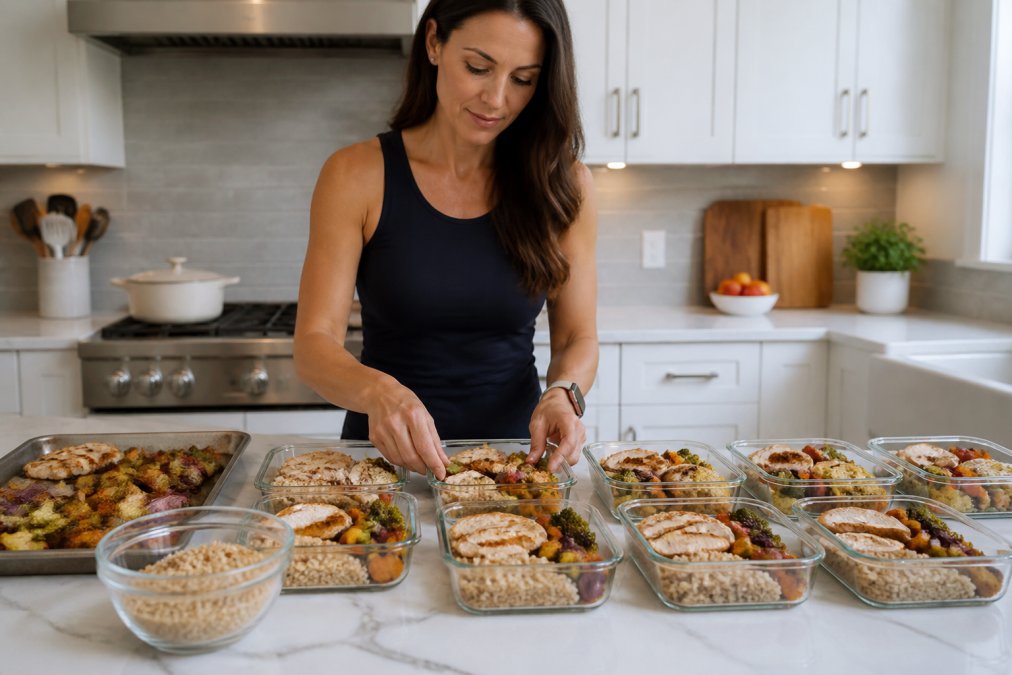
The component method means cooking a batch of lean protein, roasted vegetables, and a grain separately. These combine into different meals across the week, preventing boredom that kills consistency. One roast chicken becomes a salad, grain bowl, and stir-fry.
Nutrient-Dense Staples to Build Every Meal Around
Nutrient-dense foods deliver the most micronutrients, fiber, and satiety per calorie. For busy women focused on sustainable weight loss, keep these stocked:
- Lean protein: Chicken breast, canned salmon, Greek yogurt, eggs, cottage cheese, edamame
- Healthy fats: Avocado, extra virgin olive oil, walnuts, chia seeds
- Fiber-rich carbohydrates: Lentils, black beans, oats, sweet potato, quinoa
- Vegetables: Any frozen variety, pre-washed salad greens, cherry tomatoes, cucumber
Fiber intake deserves particular attention. Adequate fiber supports gut health, regulates blood sugar, and creates satiety that reduces mindless snacking.
Navigating Social and Professional Dining Events
Business lunches, team dinners, and client events are regular features of life for busy women. A strategy that only works when you control your food environment is not sustainable.
Decide before you arrive. Scan the menu online, identify two or three options aligned with your goals, and order without deliberating. Eating a small protein-rich snack before the event removes hunger-driven decision-making. For alcohol, choose one drink and switch to sparkling water.
The goal is not perfection at every meal, it is a consistent average over time.
High-Intensity Interval Training for Busy Women: Micro-Workouts That Deliver
High-intensity interval training is one of the most time-efficient tools for improving body composition and metabolic health. A 10 to 15-minute HIIT session, performed with genuine effort, creates a metabolic effect extending well beyond the workout itself.

Micro-workout routines designed for 10 to 15-minute windows are not a compromise. Research on physical activity and metabolic health consistently shows that frequency and consistency matter more than session duration for long-term results, as documented by the American College of Sports Medicine's guidelines on physical activity.
A practical micro-workout structure:
Workout | Duration | Format | Equipment |
|---|---|---|---|
Bodyweight HIIT | 10 min | 40 sec on / 20 sec off | None |
Resistance + Cardio | 15 min | 3 circuits of 5 exercises | Dumbbells |
Walking + Sprints | 20 min | 1 min sprint / 2 min walk | None |
Strength Focus | 15 min | 4 exercises, 3 sets each | Resistance bands |
Schedule these sessions like appointments. Women who treat workouts as fixed calendar items rather than something to fit in "if there is time" are dramatically more consistent.
How to Track Macros for Weight Loss Without Obsessing Over Numbers
Knowing how to track macros is useful. Becoming obsessed with it is counterproductive. The goal is awareness, not accounting.
The simplest entry point is the hand-portion method: your palm determines protein, your fist determines vegetables, your cupped hand determines carbohydrates, and your thumb determines fats. This requires no app, scale, or calculation and travels to restaurants without friction.
Portion Control, Lean Protein, and Fiber Intake Targets
Portion control is not about eating tiny amounts, it is about eating appropriate amounts of the right foods. For perimenopausal women, lean protein is the most important macronutrient. Adequate protein supports muscle retention during fat loss, reduces appetite, and stabilizes blood sugar.
A practical daily structure:
- Protein: A palm-sized portion at every meal, roughly three times per day
- Vegetables: Fill half the plate at lunch and dinner
- Carbohydrates: One cupped-hand portion per meal, timed around activity when possible
- Fats: One thumb-sized portion per meal from whole food sources
Tracking does not need to be permanent. Four to six weeks of conscious attention builds intuitive understanding that removes the need for ongoing logging.
Sleep, Stress Management, and Hydration: The Overlooked Pillars
Sleep, stress management, and hydration collectively have as much influence on body composition as food and exercise, yet are almost universally underweighted.
Sleep quality directly affects hunger hormones. Poor sleep elevates ghrelin, the hunger hormone, and suppresses leptin, the fullness hormone. A bad night reliably increases appetite the following day, independent of caloric needs. Sleep hygiene practices, consistent bedtimes, a cool dark room, and limiting screens before bed, are legitimate weight management tools. The CDC's sleep and chronic disease resource identifies inadequate sleep as a significant contributor to metabolic dysfunction.
Stress management is not optional for perimenopausal women. Chronic stress keeps cortisol elevated, promoting fat storage and undermining insulin sensitivity. Even ten minutes of deliberate breathing, a brief walk, or journaling has measurable physiological impact when practiced consistently.
Hydration is the simplest lever available. Many women confuse thirst signals with hunger, particularly in the afternoon. Drinking adequate water, roughly half your body weight in ounces as a starting point, reduces unnecessary snacking and supports metabolic function.
Breaking Through Weight Loss Plateaus in Women
Weight loss plateaus are not a sign something is broken, they are a predictable physiological response to sustained caloric deficit. The body adapts and metabolism adjusts. This is normal and temporary if approached correctly.
The most common mistake is doing more of the same thing harder. Cutting calories further or adding more cardio when the body is already under-recovered typically makes things worse. A more effective approach is auditing variables that have drifted: sleep quality, protein intake, workout intensity, and stress levels.
Practical plateau-breaking strategies:
- Increase protein intake slightly to preserve muscle and boost satiety
- Add one strength training session per week rather than more cardio
- Take a one-week maintenance break to reset hunger hormones
- Audit sleep quality, as even one hour less per night can stall fat loss
- Reassess stress load and cortisol management practices
Supplementation and Nutrient Gaps for Busy Lifestyles
Busy women eating in a caloric deficit are at genuine risk of micronutrient gaps affecting energy, mood, and metabolic health. The most commonly deficient nutrients in perimenopausal women include magnesium, vitamin D, iron, and omega-3 fatty acids. Magnesium supports sleep quality, stress response, and muscle function. Vitamin D affects immune function, mood, and bone health.
Before adding any supplement, consult a healthcare provider to confirm actual deficiency through bloodwork. Supplementation without a baseline is guesswork.
Building Sustainable Weight Loss Habits That Outlast Any Program
The real measure of any weight loss approach is what happens after structured support ends. Most programs create compliance, not capability. The moment external structure is removed, old patterns return.
Sustainable habits are built by understanding why old patterns existed and replacing them with behaviors serving the same psychological function without the same cost. Emotional eating is rarely about food, it is a coping mechanism for stress, boredom, or overwhelm. Removing the food without addressing the underlying driver simply redirects the behavior.
Over 12 years working with more than 600 perimenopausal women, the pattern is consistent: women who keep their results for life changed their relationship with food and themselves, not just their meal plan. A 95% success rate reflects what happens when root causes are addressed rather than managed around.
The habits predicting long-term success are straightforward:
- Eating consistently, without skipping meals, to prevent energy crashes
- Moving daily in sustainable ways, not punishing ones
- Sleeping as a priority, not a luxury
- Maintaining self-trust by following through on small commitments consistently
Consistency beats intensity every time. A moderate approach maintained for two years produces better results than an aggressive program abandoned after six weeks. The question to ask is not "will this work?" but "can I do this for the rest of my life?" If the answer is no, find a different approach.
Sustainable weight loss for busy women requires more than a caloric deficit and workout plan. The hormonal realities of perimenopause, the psychological weight of decision fatigue, the logistics of a packed schedule, and the need for genuine habit change all demand a more complete approach. Coach Justine works with perimenopausal women to address exactly these layers, combining evidence-based nutrition, strength training, and mindset coaching to build results that last. With a focus on overcoming self-sabotage, emotional eating, and all-or-nothing thinking, the program is designed to be the last one you ever need. Apply for 1:1 Coaching and build a body and life you are genuinely proud of.
Frequently Asked Questions
How can busy women maintain a calorie deficit without meal prepping for hours?
A calorie deficit does not require elaborate cooking. Focus on three to four nutrient-dense staples you rotate across the week: a lean protein, a fibrous vegetable, a healthy fat source, and a whole-food carbohydrate. Batch-cook one protein and one grain on a weekday evening in under 30 minutes. For sustainable weight loss, consistency with simple meals beats perfection with complicated ones every time.
What are the most effective time-efficient workouts for weight loss for women?
High-intensity interval training sessions of 10 to 20 minutes produce meaningful changes in body composition and metabolic health when done consistently three to four times per week. Pairing HIIT with two short strength sessions weekly preserves muscle, which supports fat loss long-term. The key for busy women is scheduling workouts like appointments rather than fitting them in when time allows.
How does stress impact weight loss in women and how can it be managed?
Chronic stress raises cortisol levels, which signals the body to store fat, particularly around the abdomen, and disrupts insulin sensitivity. For perimenopausal women, this effect is amplified by shifting hormones. Stress management strategies that actually move the needle include setting hard stop times on work, five-minute breathwork before meals, and treating sleep hygiene as a non-negotiable training variable rather than a luxury.
What are the signs of a sustainable weight loss plan versus a fad diet?
A sustainable plan does not eliminate entire food groups, does not require you to be perfect to see results, and builds habits you can maintain when life gets messy. Fad diets rely on restriction and willpower; sustainable weight loss relies on habit formation, mindful eating, and understanding your own behavioral patterns. If a plan falls apart the moment your schedule gets busy, it was never designed for your real life.
What role does sleep play in weight loss for women with demanding schedules?
Poor sleep disrupts the hormones that regulate hunger and fullness, specifically ghrelin and leptin, making it significantly harder to stay in a caloric deficit. For perimenopausal women, sleep disruption also worsens cortisol output and hormonal balance. Prioritizing seven to eight hours is not optional for sustainable weight loss. Simple sleep hygiene steps include a consistent bedtime, limiting screens 60 minutes before sleep, and keeping the bedroom cool.
How to sustainably lose weight as a woman without starting over repeatedly?
Sustainable weight loss for women depends on addressing the behavioral patterns underneath food and exercise choices, not just the choices themselves. All-or-nothing thinking, self-sabotage after a bad day, and emotional eating are the real barriers for most women who have tried multiple plans. Progress comes from building self-trust through small, consistent actions and learning to recover quickly from setbacks rather than restarting from scratch.